The Twelfth Candle: A Quiet Supper That Closes the Season

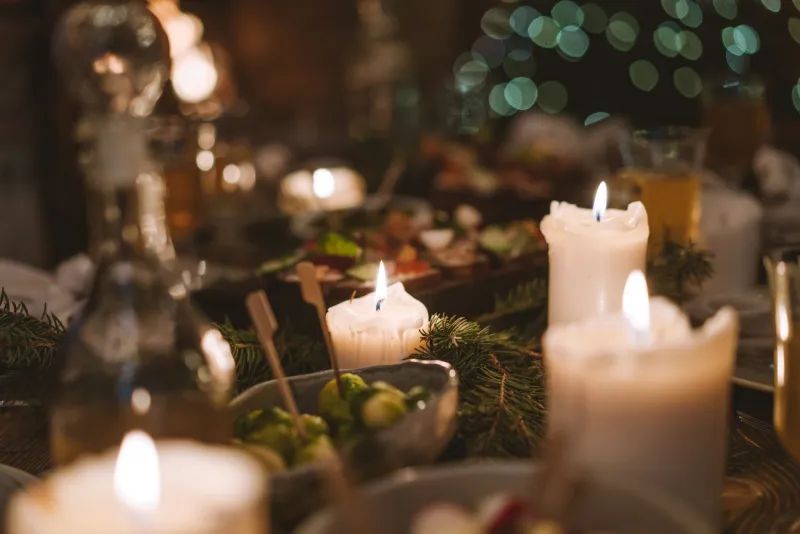
Photo: candlelit winter supper table holly ivy twelve candles dark room, via www.shutterstock.com
Christmas does not end when the wrapping paper goes out. It ends on Twelfth Night, and for most of us that ending happens by accident — a January evening spent wrestling a tree through a doorway and hoovering up pine needles in a bad mood.
A Twelfth Night supper is the alternative. One table, one last proper meal, and a deliberate, unhurried close to the season. This year Twelfth Night falls on Tuesday 5 January 2027, with Epiphany following on the Wednesday, so there is a little room to choose. Either date works. Tuesday has the advantage of being an ordinary evening you have decided to make something of.
Why the Fifth of January Matters
Traditionally, the twelve days run from Christmas Day to Twelfth Night, and the decorations should come down after — not before. To pull everything down on the twenty-seventh is to skip the last act.
There is a long British history here that is worth borrowing from. Twelfth Night was once the great festive evening: a Twelfth cake, a bean hidden inside, and whoever found it became King or Queen of the revels for the night. Wassail bowls went round. Holly and ivy were burnt. In orchard country, the wassail was carried out to the trees themselves.
None of this needs reviving at full volume. A candle, a cake, a bean and a small amount of theatre is quite enough.
Setting the Table
This is a supper, not a party, so keep it small — four is generous, six is plenty, two is perfectly good.
Leave the greenery up for this one last evening. Take the tree decorations down only if you must; holly, ivy, bay and a few dried orange slices make a better centrepiece than anything new. Use white candles, twelve of them if you can arrange it, down the middle of a plain cloth. Nothing else is required except glassware and things that are good to eat.
Turn the overhead lights off entirely. This is not a detail. A room lit only by candles changes how people speak to each other.
The Menu
Twelfth Night food should feel like the last of something, not the start of a new regime.
To begin: a leek and potato soup, or potted crab with hot toast. Something warm and unfussy.
The main event: a baked ham, glazed and served warm with mustard, or a raised pie if you are feeling ambitious. Alongside: buttered greens, roast roots, a dish of pickles, and a bowl of winter salad with bitter leaves and walnuts. Bread, obviously.
The cake: a small, rich fruit cake is traditional, but a galette des rois — puff pastry and frangipane, with a bean or a whole almond hidden inside — is easier, prettier and now widely made in Britain. Either way, warn your guests about the bean, and slice carefully.
To drink: a wassail cup. Warm cider or ale with apple, orange, clove and a little brown sugar, kept warm on the hob and ladled out. For anyone not drinking, spiced apple juice with a strip of orange peel does the job admirably.
The Bean, the Cup and the Last Candle
Two small ceremonies will carry the evening, and neither takes more than a minute.
First, the cake. Whoever finds the bean is named King or Queen for the rest of the night, which in practice means they choose the music and are not asked to do the washing up.
Second, the candles. At the end of the meal, put out eleven of the twelve, one by one, and leave a single flame burning. Carry it to the door with you, or set it by the window while you finish your drink. It is a small thing and it will feel slightly ridiculous to describe, and then you will do it and find that it does not.
Afterwards
Take the decorations down the following morning, not the same night. Play something quiet while you do it. Pack the last of the cake for whoever is going home on the train.
A season that ends in a rush always leaves a bad taste. A season that ends with a table, a candle and a few friends saying a proper goodbye to it feels, by contrast, almost like a beginning. Which, in a quiet way, is exactly what it is.